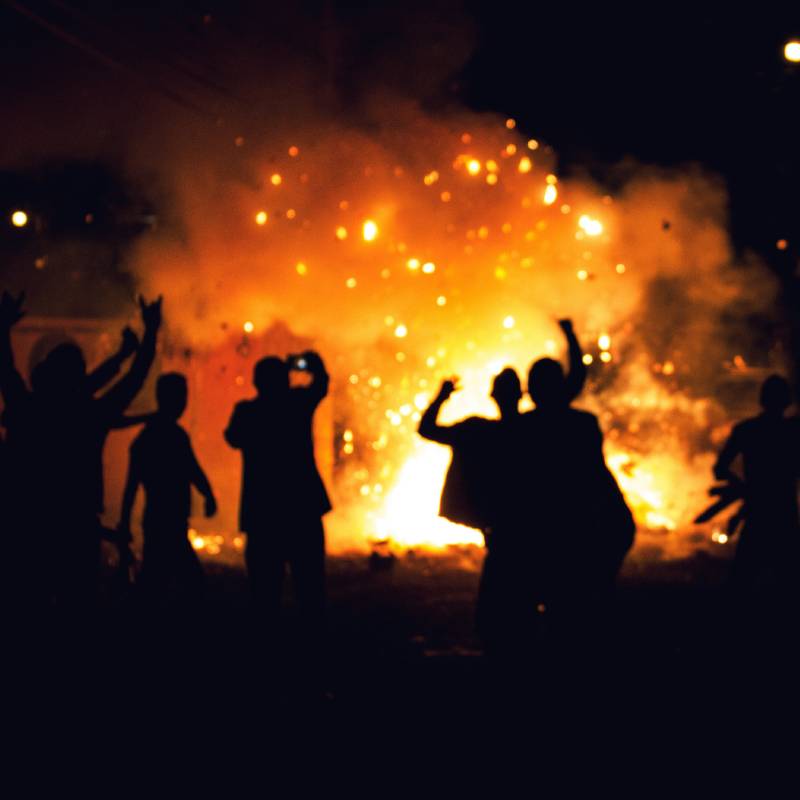
Freedom
Freedom has been the cherished dream of countless generations in countless countries
of the world. From the cry of, ‘Liberty, Equality and Fraternity’ of the French
Revolution to the sacrifice of thousands in two world wars to preserve national
freedom, right down to present day oppressed minorities of the world, people want to
be free.
Personal freedom is seen as the entitlement of all. We want freedom to choose which
school our children attend, where we live and the lifestyle we adopt. People want
freedom from stereotyped roles and expectations that are seen as culturally
conditioned. Teenagers want to be free from restrictions their parents impose. Since
the ‘Sixties, the desire of many has been captured by the words of the late Freddie
Mercury: ‘I want to break free!’
But just how free are we in this liberated age? The truth is: not as much as we would
like to be! We cannot avoid external restrictions placed upon us simply by virtue of
our living in a community. If we see freedom as having the liberty to do whatever we
want, then it becomes incredibly selfish and will damage those around us. We realise
we have to accept certain limitations placed on our own lives for the good of those
among whom we live.
We are not only conscious of external factors which limit our freedom, there are
internal ones as well. For one thing, we cannot exceed our own personal potential.
However much we might dream of being like Lionel Messi or Harry Kane on the
football pitch, few are capable of their achievements. We must live to a large extent
within the confines of what we are.
There is, however, a more sinister side to our sense of being un-free: it is the fact that
we find ourselves held captive to certain kinds of behaviour that steadily ruin our
lives. In its most extreme form, we see it in addiction to alcohol, drugs, pornography
and gambling and the like; but in reality it goes much deeper.
In the Bible Jesus talks about our deepest problem in life as being the fact we are
‘slaves to sin’ (John 8.34). We are all imprisoned not merely by a lifestyle – whether
secret or public – but by the very life with which we were born. And we cannot help
but struggle with the deep sense of guilt that comes with it. The end-point is what the
Bible describes as being ‘held in slavery to the fear of death’ (Hebrews 2.15). Death
casts its chilling shadow over all we are and all we accomplish.
The good news is that it doesn’t have to be that way. Jesus says, ‘You will know the
truth and the truth will set you free’ (John 8.32). When we face the truth about
ourselves as God sees us, then we can be truly liberated. Jesus puts a finer point on it
when he goes on to say, ‘If the Son sets you free, you will be free indeed’ (John 8.36).
He himself promises, on the basis of who he is and what he has done through his life,
death and resurrection, to liberate those who trust in him from the guilt and power of
sin. He promises freedom ‘to have life and have it to the full’ (John 10.10). It’s sad
that many religions of the world and even many forms of Christianity have turned
faith into just another kind of slavery – tying people down by rules, regulations and
ritual – because the life Jesus promises in his gospel is altogether different.
It is quite literally from a different world. Jesus tells a religious leader, called
Nicodemus, that he needs to be ‘born from above’ (John 3.3). It is nothing less the gift
of a new life from God himself – a life in fellowship with him through faith in his
Son, Jesus Christ. In that new relationship there is the promise of joy and fulfilment in
life that is no longer determined merely by external factors. Even in the face of death
itself we can have peace and comfort through him.
We can only begin to live life to the full when we’ve found life in restored fellowship
with God. Then and only then can we be set free from the guilt, powerlessness and
emptiness that otherwise clouds the very best we might otherwise experience in this
world. This is the great message of the gospel: a Saviour who, through his death and
resurrection, ‘has destroyed death and has brought life and immortality to life through
the gospel’ (2Ti 1.8). He alone can say, “I am the true life.”
Mark G Johnston